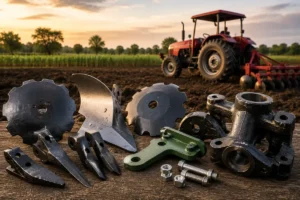
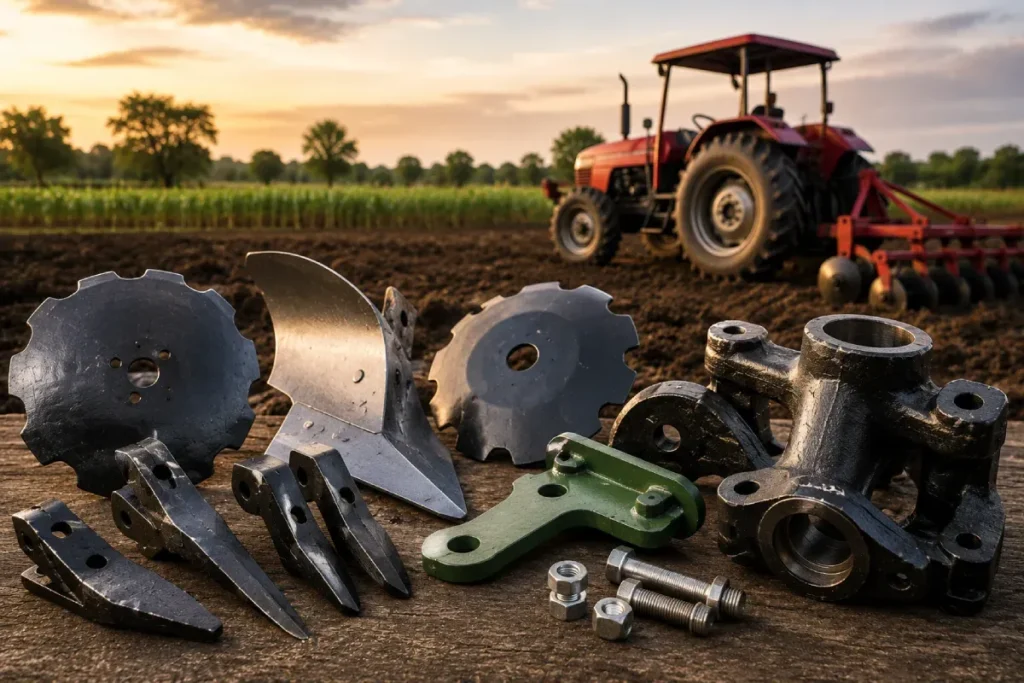
Agricultural machinery operates in some of the harshest working environments. Every day, farm equipment is exposed to soil, rocks, moisture, heavy loads, vibrations, and changing weather conditions. Under these demanding circumstances, the quality of each component plays a crucial role in ensuring reliable performance and long service life.
Whether it is a ploughshare, cultivator tine, disc blade, linkage component, or harvester part, the lifespan of agricultural equipment largely depends on the materials used during manufacturing. Choosing high-quality farm parts not only improves productivity but also reduces maintenance costs and unexpected equipment failures.
This article explains why material quality matters and how it directly influences the durability and performance of agricultural farm parts.
Why Material Quality Matters
Farm machinery experiences continuous stress during operation. Components are constantly subjected to impact, friction, bending forces, and corrosion. Poor-quality materials wear out quickly, leading to frequent replacements and increased downtime.
High-quality materials provide better strength, wear resistance, and durability, allowing agricultural equipment to perform efficiently over longer periods.
Although premium components may have a higher initial cost, they often prove more economical by reducing repair expenses and extending equipment life.
Choosing the Right Steel Grade
Steel is the most commonly used material for agricultural components because of its strength and versatility. However, not all steel offers the same level of performance.
The chemical composition of steel determines its hardness, toughness, flexibility, and resistance to wear. Manufacturers select different grades of steel depending on the intended application of each component.
For example, tillage tools that continuously cut through soil require high wear resistance, while linkage components require greater strength and impact resistance.
The Role of Heat Treatment
Heat treatment is one of the most important manufacturing processes used to improve the mechanical properties of steel.
During heat treatment, steel is heated and cooled under controlled conditions to achieve the desired hardness and strength.
Proper heat treatment offers several advantages:
- Improves wear resistance.
- Increases tensile strength.
- Enhances toughness.
- Reduces the risk of cracking.
- Extends service life.
Without proper heat treatment, even high-quality steel may fail prematurely under heavy agricultural use.
Wear Resistance in Agricultural Applications
Soil contains sand, stones, and other abrasive materials that continuously wear down farm equipment.
Components such as ploughshares, cultivator sweeps, and disc blades experience constant friction during field operations. Materials with poor wear resistance lose their cutting edges quickly, reducing efficiency and increasing fuel consumption.
Using wear-resistant materials helps maintain sharp edges for longer periods, allowing equipment to work more effectively.
Strength and Load-Bearing Capacity
Many agricultural components are exposed to heavy mechanical loads during operation.
When pulling implements through hard soil, parts experience continuous bending, twisting, and impact forces. Components manufactured from inferior materials may deform, crack, or break under these conditions.
High-strength materials provide greater structural stability and ensure reliable operation even under heavy workloads.
Corrosion Resistance
Moisture, fertilizers, pesticides, and changing weather conditions can cause corrosion on agricultural equipment.
Corrosion gradually weakens metal surfaces, reducing the strength and lifespan of components.
Manufacturers often apply protective coatings, painting, galvanizing, or other surface treatments to improve corrosion resistance and protect parts during long-term outdoor use.
Precision Manufacturing
Material quality alone cannot guarantee long service life. Precision manufacturing is equally important.
Accurate dimensions ensure that components fit correctly with tractors and agricultural implements. Poorly manufactured parts may create excessive vibration, uneven loading, and premature wear on surrounding components.
Modern manufacturing processes such as CNC machining and precision forging help maintain tight tolerances and consistent quality.
Forged vs Cast Components
Agricultural parts are commonly manufactured using forging or casting processes.
Forged components are produced by shaping heated metal under high pressure. This process aligns the internal grain structure, resulting in greater strength and improved fatigue resistance.
Cast components are produced by pouring molten metal into molds. While casting is suitable for many applications, forged parts generally offer better durability for components subjected to heavy loads.
Surface Finishing and Coatings
Surface treatments improve both the appearance and performance of agricultural components.
Common finishing methods include:
- Powder coating
- Painting
- Galvanizing
- Black oxide coating
- Zinc plating
These finishes help protect metal surfaces against rust, moisture, and environmental damage while improving overall product life.
Quality Control During Manufacturing
Reliable manufacturers follow strict quality control procedures throughout the production process.
Every stage is carefully monitored, including:
- Raw material inspection.
- Dimensional accuracy.
- Hardness testing.
- Heat treatment verification.
- Surface finish inspection.
- Final product inspection.
Consistent quality control helps ensure that every component performs as expected in real farming conditions.
How Low-Quality Parts Increase Operating Costs
Choosing cheaper components may appear to reduce costs initially, but poor-quality parts often require more frequent replacement.
Common problems include:
- Faster wear.
- Unexpected breakdowns.
- Higher maintenance costs.
- Equipment downtime.
- Reduced field productivity.
- Damage to other machine components.
Over time, these hidden costs often exceed the savings made when purchasing low-quality parts.
Benefits of High-Quality Agricultural Farm Parts
- Longer service life.
- Improved equipment performance.
- Reduced maintenance requirements.
- Better resistance to wear and corrosion.
- Lower operating costs.
- Greater reliability during peak farming seasons.
- Improved compatibility with agricultural equipment.
How to Identify Quality Agricultural Components
When purchasing farm parts, buyers should consider more than just price.
Important factors include:
- Material grade.
- Manufacturing quality.
- Heat treatment process.
- Protective surface coating.
- Dimensional accuracy.
- Manufacturer reputation.
- Quality certifications.
Working with trusted manufacturers helps ensure consistent product quality and dependable long-term performance.
Final Thoughts
The quality of materials used in agricultural farm parts directly affects equipment reliability, maintenance costs, and overall productivity. Stronger materials, proper heat treatment, precision manufacturing, and rigorous quality control all contribute to longer-lasting components that perform efficiently under demanding field conditions.
Rather than focusing only on purchase price, farmers, distributors, and equipment manufacturers should evaluate the long-term value of agricultural components. Investing in quality parts reduces downtime, extends equipment life, and improves operational efficiency throughout every farming season.
As agriculture continues to adopt more advanced machinery and technology, high-quality farm parts will remain essential for ensuring reliable performance and sustainable farming operations around the world.