Forklifts are essential to warehouses, manufacturing facilities, logistics centers, ports, and industrial plants. They operate for long hours, often carrying heavy loads in demanding environments. While engines, hydraulics, and lifting systems receive regular attention, forklift tires are often overlooked until they begin to fail.
Proper tire maintenance is one of the simplest and most cost-effective ways to improve forklift performance, reduce downtime, and extend equipment life. Well-maintained tires provide better traction, improved stability, enhanced operator safety, and lower operating costs.
This guide explains the best practices for maintaining forklift tires and maximizing their service life.
Why Forklift Tire Maintenance Matters
Forklift tires do much more than support the weight of the machine. They directly affect steering, braking, stability, lifting capacity, and operator comfort.
Worn or damaged tires can increase stopping distances, reduce load stability, place additional stress on the suspension system, and increase the risk of workplace accidents.
Regular maintenance helps businesses improve safety while reducing unexpected repair costs and equipment downtime.
Know Your Forklift Tire Type
Different forklift applications require different types of tires. Understanding the type installed on your equipment helps determine the correct maintenance procedures.
Solid Tires
Solid tires are puncture-resistant and commonly used in warehouses, manufacturing plants, and indoor operations. They require minimal maintenance but should be inspected regularly for wear and damage.
Pneumatic Tires
Pneumatic tires contain air and provide better shock absorption. They are commonly used on rough outdoor surfaces, construction sites, and uneven terrain. Maintaining proper air pressure is essential for their performance.
Press-On Tires
Press-on tires are designed for electric forklifts operating on smooth indoor floors. They offer excellent maneuverability and require routine inspection for wear.
Non-Marking Tires
These tires are commonly used in food processing plants, pharmaceutical facilities, and clean environments where floor markings must be avoided.
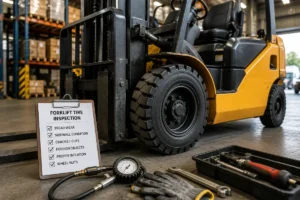
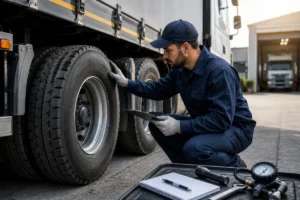
Inspect Tires Daily
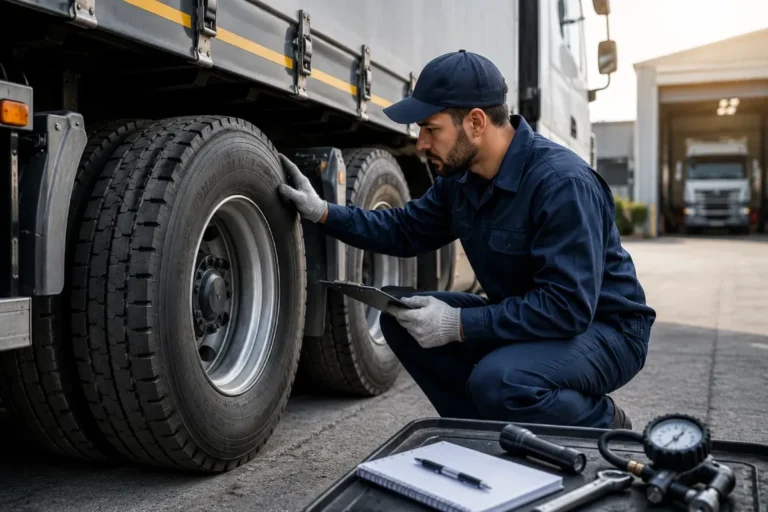
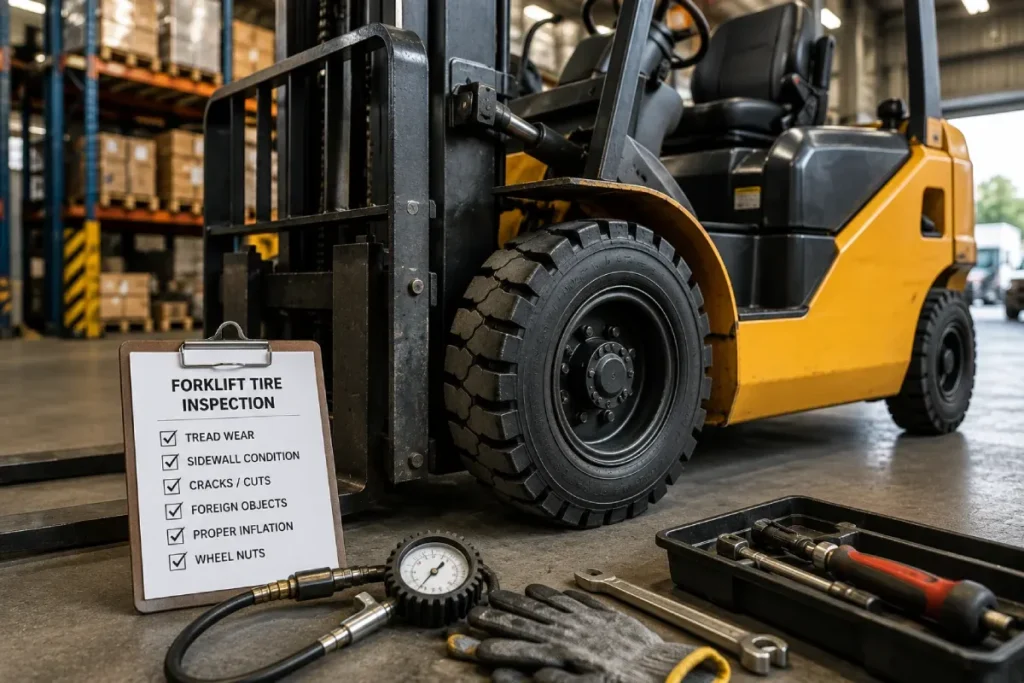
A simple visual inspection before every shift can help identify problems before they become serious.
Look for:
- Uneven tread wear.
- Cuts or cracks.
- Chunks missing from the rubber.
- Embedded nails or sharp objects.
- Sidewall damage.
- Flat spots.
- Loose wheel nuts.
Finding these issues early helps prevent unexpected breakdowns and expensive repairs.
Maintain Correct Tire Pressure
This applies only to pneumatic forklift tires.
Operating with incorrect air pressure affects traction, load capacity, and stability. Underinflated tires generate excessive heat and wear more quickly, while overinflated tires reduce ground contact and increase the risk of impact damage.
Always check tire pressure when the tires are cool and follow the manufacturer’s recommended inflation values.
Monitor Tire Wear
Forklift tires naturally wear over time, but excessive wear reduces their ability to support loads safely.
Most solid tires include wear indicators that show when replacement is necessary. Operating beyond the recommended wear limit can reduce forklift stability and increase the likelihood of accidents.
Inspect tread depth regularly and replace tires before they reach unsafe wear levels.
Avoid Overloading
Every forklift has a rated load capacity, and every tire is designed to support a specific weight.
Frequently exceeding these limits places excessive stress on the tires, increasing wear and the risk of structural failure.
Operators should always follow the forklift’s rated lifting capacity and distribute loads correctly.
Drive Smoothly
Operator behavior has a direct impact on tire life.
Rapid acceleration, sudden braking, aggressive cornering, and high-speed operation create additional friction and heat, leading to faster tire wear.
Smooth driving not only extends tire life but also improves workplace safety and protects transported goods.
Keep Floors Clean
Warehouse floors often contain metal shavings, broken pallets, nails, glass, or other debris.
These objects can damage tires, especially pneumatic models, and create unnecessary wear on solid tires.
Regular cleaning of operating areas helps protect both tires and forklifts.
Rotate Tires When Appropriate
Depending on the forklift model and operating conditions, rotating tires can help distribute wear more evenly.
Although not every forklift allows tire rotation, following manufacturer recommendations can extend overall tire life where applicable.
Check Wheel Alignment
Poor wheel alignment causes uneven tire wear and places additional stress on steering components.
If the forklift pulls to one side or the tires show unusual wear patterns, the steering and alignment system should be inspected by qualified technicians.
Protect Tires from Chemicals
Industrial facilities often use oils, solvents, acids, and chemicals that may damage rubber compounds over time.
Cleaning tires after exposure and selecting tires suitable for the working environment helps maintain performance and durability.
Store Equipment Properly
When forklifts remain unused for long periods, proper storage helps preserve tire condition.
Whenever possible:
- Store equipment indoors.
- Avoid prolonged exposure to sunlight.
- Keep forklifts away from chemicals.
- Maintain recommended tire pressure.
Proper storage slows rubber aging and prevents unnecessary deterioration.
When Should Forklift Tires Be Replaced?
Forklift tires should be replaced if you notice:
- Excessive tread wear.
- Visible cracks.
- Deep cuts.
- Sidewall damage.
- Chunking or separation.
- Reduced load stability.
- Frequent loss of air pressure (pneumatic tires).
Replacing worn tires before complete failure helps prevent costly downtime and improves operator safety.
Benefits of Regular Tire Maintenance
- Longer tire service life.
- Improved workplace safety.
- Reduced maintenance costs.
- Lower equipment downtime.
- Better load stability.
- Improved operator comfort.
- Higher productivity.
- Lower overall operating costs.
Common Maintenance Mistakes
Many businesses unintentionally shorten tire life by making avoidable mistakes.
- Ignoring daily inspections.
- Operating with worn tires.
- Using incorrect tire pressure.
- Overloading forklifts.
- Driving aggressively.
- Ignoring alignment issues.
- Delaying tire replacement.
A proactive maintenance program can eliminate many of these problems before they affect operations.
Final Thoughts
Forklift tires play a vital role in material handling operations. Proper maintenance not only extends tire life but also improves safety, equipment reliability, and workplace productivity.
Simple practices such as daily inspections, maintaining proper tire pressure, avoiding overloads, and replacing worn tires at the right time can significantly reduce operating costs and prevent unnecessary downtime.
Whether operating a single forklift or managing a large warehouse fleet, investing in tire maintenance is a practical step toward improving efficiency and ensuring smooth day-to-day operations.