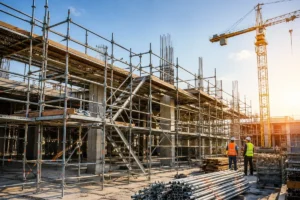
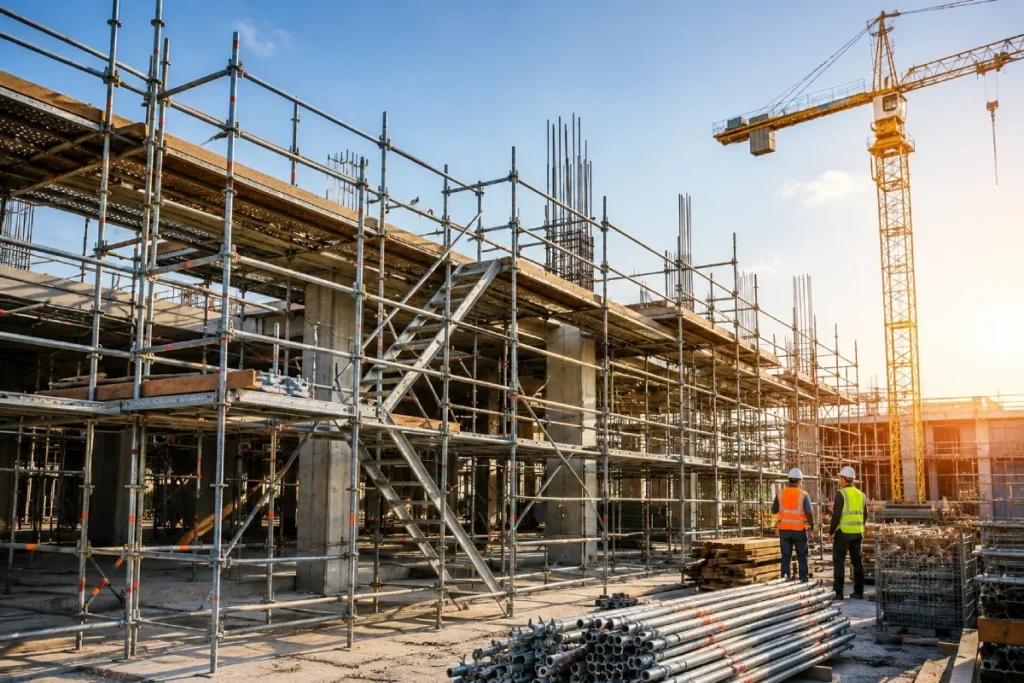
Scaffolding is one of the most essential components of the construction industry. Whether constructing a residential building, a high-rise commercial tower, a bridge, or an industrial plant, scaffolding provides workers with safe access to elevated work areas while supporting tools and construction materials.
Modern construction projects demand scaffolding systems that are not only strong and durable but also easy to assemble, adaptable to different structures, and compliant with international safety standards. Choosing the right scaffolding system improves productivity, reduces project delays, and enhances worker safety.
This guide explains the major types of scaffolding systems, their features, advantages, and the applications where each system performs best.
What is a Scaffolding System?
A scaffolding system is a temporary structure used to provide safe working platforms during construction, maintenance, repair, and inspection activities. It supports workers, equipment, and building materials at different heights while allowing access to areas that would otherwise be difficult to reach.
Modern scaffolding systems are manufactured using high-strength steel or aluminum and are designed for quick assembly, structural stability, and repeated use across multiple projects.
Why Choosing the Right Scaffolding Matters
Different construction projects have different structural requirements. A residential building may require a simple frame system, while a bridge or refinery may demand a modular scaffolding solution capable of supporting heavy loads.
Selecting the correct scaffolding system offers several advantages:
- Improved worker safety
- Faster project completion
- Reduced labor costs
- Greater structural stability
- Easy installation and dismantling
- Better adaptability to complex structures
Cuplock Scaffolding System
Cuplock scaffolding is one of the most widely used modular scaffolding systems in modern construction. It uses a unique locking mechanism where horizontal members are secured to vertical standards using fixed and movable cups.
This design eliminates the need for separate nuts and bolts, allowing faster assembly and reducing installation time.
Advantages
- Quick installation and dismantling
- High load-bearing capacity
- Suitable for large projects
- Requires fewer components
- Excellent structural stability
Applications
- Commercial buildings
- Industrial plants
- Bridges
- Power plants
- Infrastructure projects
H Frame Scaffolding
H Frame scaffolding, also known as frame scaffolding, is one of the simplest and most commonly used systems in residential and commercial construction. It consists of welded steel frames connected using cross braces.
Its simple design makes it easy to transport, assemble, and dismantle, making it a popular choice for contractors.
Advantages
- Simple construction
- Cost-effective solution
- Quick installation
- Reusable components
- Easy transportation
Applications
- Residential buildings
- Commercial complexes
- Painting projects
- Maintenance work
- Interior finishing
Tube and Clamp Scaffolding
Tube and clamp scaffolding is one of the most flexible scaffolding systems available. It uses steel tubes connected with clamps to create customized structures.
Because each connection can be adjusted individually, this system is ideal for projects involving complex shapes and irregular building designs.
Advantages
- Highly flexible design
- Suitable for irregular structures
- Strong and durable
- Can be customized for almost any project
Applications
- Industrial facilities
- Refineries
- Shipyards
- Complex architectural projects
Mobile Scaffolding
Mobile scaffolding is mounted on wheels, allowing workers to move the structure without dismantling it.
This system is commonly used where frequent repositioning is required over relatively smooth surfaces.
Advantages
- Easy mobility
- Improves work efficiency
- Reduces setup time
- Ideal for maintenance work
Applications
- Warehouse maintenance
- Painting work
- Electrical installation
- Facility maintenance
Suspended Scaffolding
Suspended scaffolding consists of a working platform suspended from the roof using ropes or steel cables. The platform can be raised or lowered as required.
It is widely used for exterior building maintenance where ground-supported scaffolding is not practical.
Advantages
- Access to high-rise buildings
- Adjustable working height
- Minimal ground obstruction
- Efficient for façade work
Applications
- Window cleaning
- Building maintenance
- Exterior painting
- Façade repairs
Cantilever Scaffolding
Cantilever scaffolding is supported at one end while the other end projects outward. It is used when the ground below cannot support traditional scaffolding.
Applications
- Bridge repairs
- Roadside construction
- Building extensions
- Areas with limited ground access
Essential Scaffolding Components
Although scaffolding systems vary, most include similar structural components.
- Standards (Vertical Members)
- Ledgers (Horizontal Members)
- Transoms
- Cross Braces
- Steel Planks
- Base Plates
- Adjustable Base Jacks
- Guard Rails
- Toe Boards
- Couplers & Clamps
Safety Considerations
Regardless of the scaffolding system used, safety should always be the highest priority.
Good safety practices include:
- Inspect scaffolding before use.
- Use only certified components.
- Install proper guard rails and toe boards.
- Ensure stable foundations.
- Do not exceed load limits.
- Train workers on proper scaffold use.
- Perform regular maintenance and inspections.
Factors to Consider When Choosing a Scaffolding System
Selecting the right scaffolding depends on several project requirements.
- Building height
- Project duration
- Load requirements
- Site conditions
- Ease of installation
- Worker safety requirements
- Budget
- Future reusability
Evaluating these factors before starting a project helps improve efficiency while minimizing installation costs.
The Importance of Quality Manufacturing
High-quality scaffolding is manufactured using premium-grade steel, precision fabrication, and strict quality control procedures. Well-manufactured components fit accurately, offer greater structural stability, and provide longer service life across multiple construction projects.
Investing in quality scaffolding not only improves worker safety but also reduces maintenance costs and replacement frequency over time.
Final Thoughts
Scaffolding systems are essential for safe and efficient construction. From simple residential buildings to complex infrastructure projects, choosing the right system directly impacts productivity, worker safety, and project success.
Understanding the differences between Cuplock, H Frame, Tube and Clamp, Mobile, Suspended, and Cantilever scaffolding helps contractors and project managers select the most suitable solution for their specific requirements.
By combining the right scaffolding system with proper installation, regular inspections, and quality components, construction companies can create safer workplaces, complete projects more efficiently, and achieve better long-term performance.